How To Fix Charging Port Corrosion In Smart Rings?
Your smart ring tracks your sleep, your heart rate, and your daily steps. Then one morning it will not charge. You place it on the charger and nothing happens. You look closely and spot a strange green or white crust on the metal contacts.
That crust is corrosion, and it blocks the electrical connection your ring needs to power up. The good news is that early corrosion is often fixable at home.
You do not need special tools or expensive repairs. This guide walks you through every safe step. You will learn what causes corrosion, how to clean it, and how to stop it from coming back for good.
Key Takeaways
- Corrosion happens because of moisture and salt. Sweat, water, soap, and lotion react with the metal contacts and create a green or white buildup that blocks charging.
- Isopropyl alcohol is your best cleaning tool. Use a strength of 91 percent or higher because it evaporates fast and leaves almost no water behind.
- Never use sharp metal objects on the contacts. A knife or pin scratches the plating and can break the fragile pins, which turns a small problem into a permanent one.
- Always turn the ring off and dry it fully before charging. Charging a wet or dirty ring is the fastest way to create more corrosion or cause a short.
- Prevention beats repair every time. A quick weekly wipe of the contacts stops most corrosion before it ever starts.
- Some damage is beyond home repair. If the ring swells, gets hot, or corrosion sits deep inside the sealed body, stop and check your warranty or replacement options.
What Is Charging Port Corrosion In Smart Rings
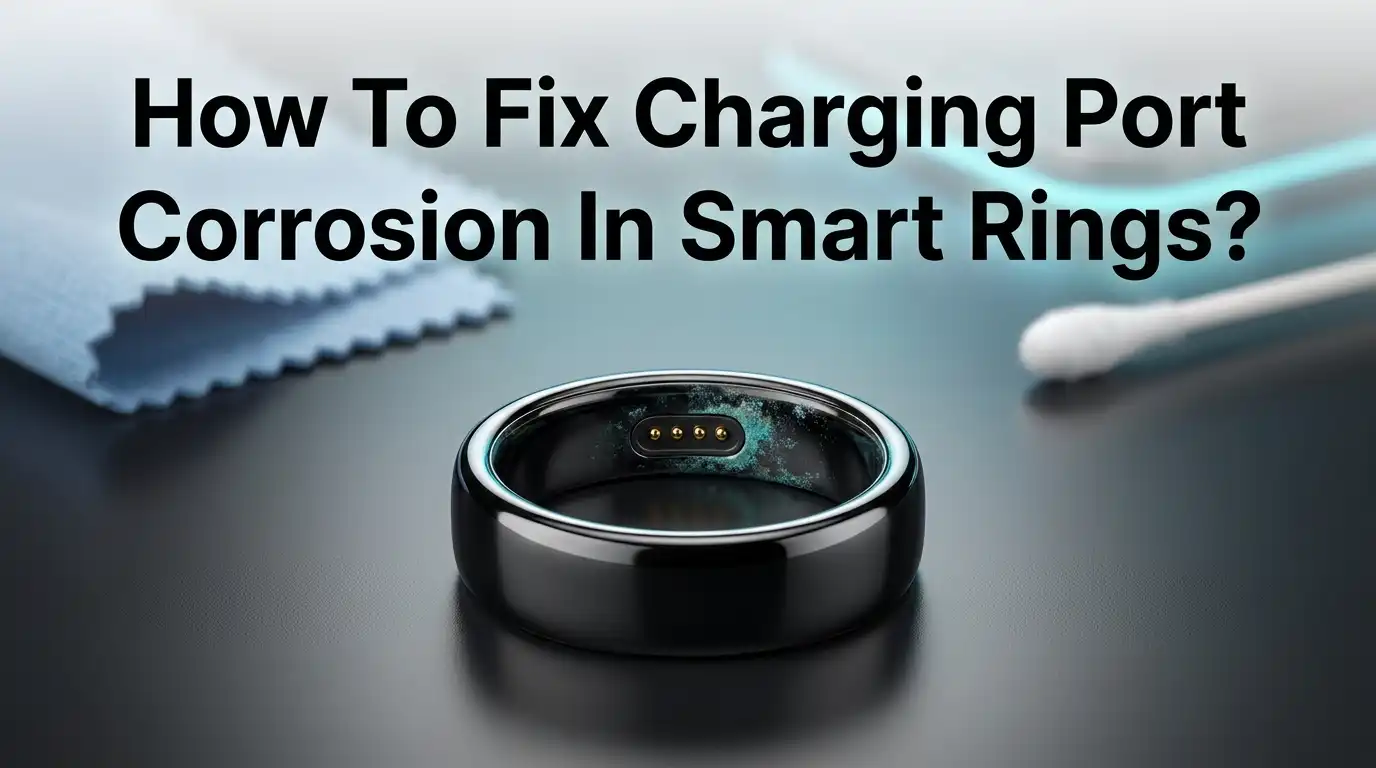
Charging port corrosion is a chemical reaction on the metal charging contacts. Your smart ring uses small metal pins or pads to connect with the charger.
These contacts are usually made from copper with a thin gold or metal coating. When moisture and salt touch this metal, a slow reaction begins. The metal starts to oxidize.
You will see this as a green, white, or dark crusty layer on the contacts. This layer is not just dirt. It is a barrier that stops electricity from passing between the ring and the charger.
That is why your ring suddenly refuses to charge, even though the charger light looks normal. Understanding this helps you fix the real problem instead of guessing.
Common Signs Your Smart Ring Has Corrosion
Spotting corrosion early saves your ring. The most obvious sign is a color change on the contacts. Healthy contacts look shiny and clean. Corroded contacts look green, chalky white, or dull brown. You may need a bright light or a magnifying glass to see it clearly.
Other signs show up during charging. Your ring may charge very slowly, charge only in certain positions, or stop charging completely. Sometimes the charge percentage jumps around or refuses to rise above zero.
You might also feel a rough or gritty texture when you wipe the contacts. If your ring worked fine last week and now ignores the charger, corrosion is one of the first things to check. Catching these signs early means an easier and cheaper fix.
Why Corrosion Happens On Smart Ring Contacts
Corrosion has a clear cause, and it is not bad luck. Your finger sweats all day. Sweat contains water and salt, and both attack exposed metal.
Since you wear your ring against your skin for hours, the contacts sit in a warm and salty environment. Over time this speeds up oxidation.
Water and chemicals make it worse. Soap, sunscreen, lotion, hand sanitizer, and salt water all leave a film that traps moisture against the metal. Charging a ring while it is still damp is a big trigger too.
Another cause is arcing, which is a tiny spark that pits the metal when power connects poorly. Knowing these causes matters because the same habits that cause corrosion are the ones you will change to prevent it.
Tools And Materials You Need Before Starting
Gather your supplies before you begin. This keeps the job smooth and safe. You do not need anything expensive or hard to find. Most items already sit in your bathroom or kitchen drawer.
Here is your simple checklist:
- Isopropyl alcohol at 91 percent or higher. This is the key cleaner. Avoid the 70 percent kind because it holds too much water, which can cause more corrosion.
- Cotton swabs with paper or firm stems. These reach small contacts without leaving fibers behind.
- A soft toothbrush or a soft plastic brush. Never use a wire brush. Soft bristles lift gunk without scratching.
- A clean, lint free microfiber cloth. This dries and polishes the contacts.
- Good lighting and a magnifying glass. These help you see the tiny contacts clearly.
Having these ready means you can work carefully and avoid rushing, which is when mistakes happen.
Step By Step Guide To Clean Light Corrosion
Start with the gentle method for light corrosion. First, turn your ring off if the model allows it, and unplug the charger from power. This protects both you and the device. Never clean a powered device.
Next, do a dry clean. Use the soft brush to gently sweep away loose crust and dust from the contacts. Brush in one direction. This breaks up the buildup before you add liquid, which keeps things from turning into a messy paste.
Now dip a cotton swab in the isopropyl alcohol. It should be damp, not dripping. Gently rub the contacts in small circles until the green or white layer lifts away.
Repeat with a fresh swab as needed. Finally, wipe with the microfiber cloth and let the ring air dry fully. Do the same for the charger contacts.
Pros: This method is cheap, fast, and safe for the ring’s coating. Cons: It only works on early corrosion, and heavy buildup may need more effort or repeat sessions.
How To Handle Stubborn Or Heavy Corrosion
Sometimes alcohol alone will not shift thick, stubborn corrosion. In that case, you can try a mild acidic cleaner. A tiny bit of white vinegar on a cotton swab helps dissolve heavy oxidation. Vinegar is mildly acidic and breaks down the green crust that alcohol leaves behind.
Apply it carefully. Dampen the swab, dab the contacts, and wait only a few seconds before wiping. Do not soak the ring. Vinegar contains water, so you must follow up right away.
Clean the same spot with isopropyl alcohol to remove all vinegar and water traces, then dry it completely. Some people add a pinch of baking soda for gentle scrubbing, but use this with great care.
Pros: Vinegar removes buildup that alcohol cannot touch. Cons: It adds water and acid near sensitive parts, so there is a higher risk if you rush or use too much liquid.
Safe Cleaning Methods Versus Risky Ones
Not every cleaning trick you read online is safe. Knowing the difference protects your ring. The safe path uses soft brushes, cotton swabs, high strength isopropyl alcohol, and patience. These remove corrosion without harming the delicate metal coating or the pins.
The risky path can destroy your ring. Never scrape the contacts with a knife, needle, screwdriver, or sandpaper. Sharp tools strip the thin gold plating and can snap the pins right off the circuit board. Wire brushes do the same damage.
Avoid soaking the ring in any liquid, and never pry open the sealed body with tools. Opening a smart ring usually breaks its water resistance and can ruin it for good. Stick to gentle methods, and if gentle methods fail, treat that as a signal to seek help rather than force it.
What To Do If The Ring Still Will Not Charge
Sometimes you clean everything and the ring still refuses to charge. Do not panic. Work through a few simple checks before you assume the worst. First, clean and dry the charger contacts too, since corrosion or grime can build up there as well.
Then test the basics. Try a different USB cable and a different power adapter, because a weak cable can mimic a corrosion problem. Make sure the ring sits in the exact correct position on the charger, since alignment matters a lot on smart rings.
A deeply drained ring may also need extra time, so leave it on the charger longer than usual before judging.
Also restart your phone, reopen the app, and check for firmware updates. If the ring hit zero percent, some brands need you to reconnect it in the app before it works again. These steps rule out problems that look like corrosion but are not.
When Corrosion Is Too Deep To Fix At Home
Some corrosion sits beyond your reach. Smart rings are sealed devices, and the internal electronics are not made for home repair. If corrosion has spread inside the ring body, cleaning the outside contacts will not solve it. This kind of damage usually needs a professional or a replacement.
Watch for serious warning signs. If the ring gets hot, swells, smells strange, or feels tighter on your finger, stop using it right away.
These signs point to internal battery or electronic failure, not a simple contact issue. A swollen battery on your finger is a safety risk, so never keep charging or wearing it.
Pros of stopping here: You avoid injury and avoid making the damage worse. Cons: You may lose the ring or pay for a replacement, but that beats risking your safety or the device.
How To Prevent Charging Port Corrosion For Good
Prevention is easier than any repair. The single best habit is drying your ring before you charge it. After showering, swimming, washing hands, or a sweaty workout, wipe the ring and its contacts with a dry cloth first. Never place a wet ring on the charger.
Build a small routine. Wipe the contacts and inside of the ring once or twice a week with a dry cotton swab, and more often if you sweat a lot. This removes salt and film before they can react.
Some people apply a very thin layer of dielectric grease or petroleum jelly to protect metal contacts, though you should test this carefully since it can affect connection if overused.
Also charge your ring at room temperature and keep it out of humid bathrooms. These small habits stop most corrosion before it ever begins.
Best Charging Habits To Protect Your Smart Ring
Good charging habits protect both the contacts and the battery. Start with clean hands and a clean ring. Always remove sweat, lotion, and sunscreen from the ring before it touches the charger. This keeps the contacts free of the films that cause buildup.
Mind your charging environment and timing. Charge in a dry room at normal temperature, not in a steamy bathroom, a hot car, or a cold garage. Extreme heat and moisture speed up both corrosion and battery wear.
Short, regular top ups are often kinder than draining the ring to zero every time. A quick daily charge while you shower or get ready keeps the battery healthy and reduces deep discharges.
Use only the charger made for your exact ring model and size, since a poor fit causes weak contact and arcing that pits the metal over time.
Frequently Asked Questions
Can I use regular rubbing alcohol to clean my smart ring contacts?
You can, but the strength matters a lot. Use isopropyl alcohol at 91 percent or higher. The common 70 percent version holds about 30 percent water, and that extra water can seep into the contacts and cause more corrosion. Higher strength alcohol evaporates fast and leaves almost no moisture behind, which makes it much safer for electronics.
Will corrosion damage my smart ring permanently?
Not always. Light corrosion on the outer contacts is usually reversible with gentle cleaning. The problem becomes permanent when corrosion spreads deep inside the sealed ring or when someone scrapes the contacts with sharp tools and breaks the pins. If you catch it early and clean it gently, most rings recover fully and charge normally again.
How often should I clean my smart ring charging contacts?
A good routine is once or twice a week for normal use. If you sweat heavily, swim often, or expose the ring to soap and lotion, clean it more frequently. A quick dry wipe with a cotton swab takes only seconds. This simple habit removes salt and film before they react with the metal and cause buildup.
Is it safe to use vinegar on smart ring contacts?
Vinegar works on stubborn corrosion, but use it with care. Apply only a tiny amount on a cotton swab, wait a few seconds, then wipe it off. Because vinegar contains water and acid, you must follow up immediately with isopropyl alcohol and dry the ring fully. Never soak the ring or leave vinegar sitting on the contacts.
Why does my ring charger contact get corroded too?
The charger contacts touch the same sweat, moisture, and film that your ring picks up from your skin. When you place a damp or dirty ring on the charger, you transfer grime and salt to the charger pins. Over time this builds up and corrodes. That is why you should clean both the ring and the charger contacts during every cleaning session.
Should I open my smart ring to clean corrosion inside?
No. Smart rings are sealed to stay water resistant, and opening one almost always breaks that seal. You risk damaging the battery, sensors, and antenna, and the ring may stop working entirely. Home cleaning should stay on the outer charging contacts only. If corrosion is inside, contact the maker about warranty or replacement instead.
Can I prevent corrosion with a protective coating?
Some users apply a very thin layer of dielectric grease or petroleum jelly to shield the metal from moisture. This can help, but too much coating blocks the electrical connection and stops charging. If you try it, use the smallest possible amount and test that the ring still charges. For most people, a simple habit of drying the ring and wiping the contacts works better and carries less risk.

Hi, I’m Jessamine Rowell, the founder and voice behind ResizeMake (https://resizemake.com/), a space where I share my love for technology with the world. I write detailed and honest reviews on the latest tech products, gadgets, electronic devices, and trending Amazon items to help readers make smarter buying decisions.