
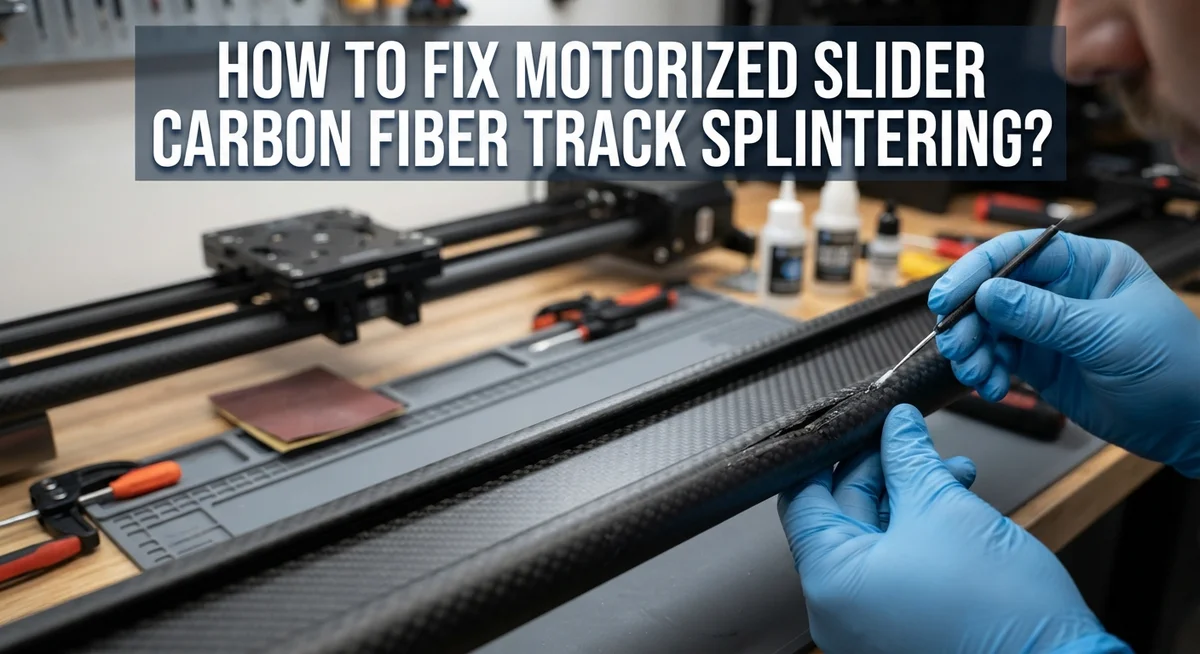
How To Fix Motorized Slider Carbon Fiber Track Splintering?
Your motorized slider makes filming smooth and easy. But over time, you might notice tiny splinters on the carbon fiber track. This can turn a fun shoot into a frustrating problem.
Splintering usually happens at the ends of the track. Flexing, vibration, and loose connections cause this damage. If you ignore it, the issue can get worse and even become unsafe to touch.
Carbon fiber splinters are not like wood splinters. They are sharp and hard to spot. They can also be dangerous if inhaled or if they get stuck in your skin.
The good news is that you can fix this problem at home. You just need a few simple tools and some patience.
In a Nutshell
- Tape the area first. Use masking tape around the damaged section before you touch it. This keeps splinters contained and stops them from spreading.
- Apply liquid resin or cement. Coat the taped area with a thin layer. This binds loose fibers and stops further splitting.
- Reinforce with resin tape. Secure any wobbly brackets using tape soaked in resin. This adds extra strength to weak spots.
- Sand once it cures. After the resin dries, sand the surface smooth. Your track will feel safe to handle again.
- Remove splinters with pantyhose. Gently dab the area with pantyhose to lift out tiny fibers. This method is safer than using your bare fingers.
- Prevent future damage. Keep your focal length under 50mm and control your slider speed. A stable setup means fewer flexing issues at the track ends.
What Causes Carbon Fiber Track Splintering
Carbon fiber track splintering happens because of how your motorized slider moves and flexes during use. The main culprit is gravity pulling down on the track, especially at the ends where support is weakest.
When your slider moves along the track, the weight creates constant flexing. This bending motion stresses the carbon fiber material. Over time, small cracks form on the surface. These cracks eventually break apart into splinters.
Connection points are another major problem area. Where brackets attach to the track, tiny gaps can develop. Your slider’s movement causes these connections to wiggle back and forth. This rocking motion wears away at the carbon fiber fibers. The material begins to separate and splinter outward.
Vibrations make splintering worse. High magnification ratios amplify shaking during filming. When your camera zooms in tight, even small vibrations become visible. These vibrations travel through the track and weaken the carbon fiber structure. The fibers break apart more easily.
Speed and focal length both affect splintering risk. Running your slider at maximum speed increases vibration. Using focal lengths over 50mm amplifies movement issues. Both factors put extra stress on the track material.
Improper support underneath the track creates additional problems. If your track isn’t stable or level, it flexes unevenly. Uneven flexing concentrates stress in specific spots. These stress points splinter first.
Poor handling also causes damage. Dropping the slider or bumping the track creates instant splinters. Rough handling breaks more fibers loose. Each impact weakens the surrounding material.
Understanding these causes helps you prevent future splintering. You’ll know why it happens and what actions make it worse. This knowledge lets you take smart steps to protect your equipment and keep your track in good condition.
Safety First: Handling Splinters and Carbon Dust
Carbon fiber splinters demand special care because they behave differently than wood splinters. These tiny fibers are extremely sharp and difficult to remove once embedded in skin. They also pose an inhalation risk if you breathe in the dust particles.
Start by protecting yourself before touching any damaged area. Wear nitrile gloves to shield your hands from splinters. Use a dust mask or respirator when working near the affected track section. This prevents you from inhaling carbon fiber particles, which can irritate your lungs and airways.
When you encounter splinters, never pull them out with bare fingers. The pantyhose method works exceptionally well for this task. Gently dab the affected area with clean pantyhose material. The soft fibers catch and lift embedded splinters without pushing them deeper into your skin. This approach removes splinters safely without causing additional damage.
Handle the damaged track section with extreme care. Avoid touching the splintered edges directly. Each contact can break off more fibers and create additional splinters. Move slowly and deliberately around the damaged area to prevent generating more dust.
Ensure your work area has good ventilation. Open windows or use a fan to push dust away from your breathing zone. Wipe down your work surface with a damp cloth after finishing repairs. This captures loose fibers before they become airborne.
If splinters become embedded deep in your skin, resist the urge to dig them out aggressively. Clean the area gently and allow your body’s natural healing process to work. Persistent splinters may require professional medical attention.
Your safety comes first when working with carbon fiber. These precautions protect both your skin and your respiratory system during repairs.
Tools and Materials You’ll Need Before Starting Repairs
Before you start fixing your motorized slider carbon fiber track, gather the right equipment. Having everything ready makes the repair faster and safer.
Protective gear protects you first. Nitrile gloves shield your hands from splinters and resin. A dust mask or respirator prevents you from breathing carbon fiber particles. Safety glasses protect your eyes from flying debris during sanding. These items are essential when working with carbon fiber materials.
Cleaning supplies remove dust and debris. You need soft brushes to gently clear the damaged area. Lint free cloths work best for wiping surfaces. Avoid paper towels because they leave fibers behind.
Taping materials secure the repair zone. Masking tape marks the damaged section and contains splinters. Painter’s tape works as an alternative. Resin reinforced tape holds brackets steady during curing.
Adhesive materials bond the carbon fiber. Liquid epoxy resin or carbon fiber cement fills gaps and strengthens the track. You only need a small amount for each repair. These products cure hard and restore structural integrity.
Smoothing tools finish the job. Sandpaper in various grits (start with 120 grit, finish with 220 grit) smooths the cured resin. Sanding blocks help you apply even pressure. Fine grit paper creates a smooth surface that matches the original track.
Splinter removal requires specific items. Pantyhose gently lift embedded splinters without causing skin damage. This method is safer than tweezers or needles. A magnifying glass helps you see tiny fibers clearly.
Work surface preparation matters too. A clean, flat workspace prevents accidents. Good lighting helps you see splintered areas clearly. Proper ventilation keeps carbon dust away from your breathing space.
Step-by-Step Guide to Repairing a Splintered Track
Start by applying masking tape directly over the splintered area. This step contains loose fibers and prevents them from spreading further. Press the tape firmly so it adheres completely to the damaged section.
Next, prepare your liquid cement or epoxy resin according to its instructions. Mix only the amount you need for this repair. Apply the resin generously over the taped section using a brush or applicator.
The resin soaks into the carbon fiber and hardens the splintered edges. Allow it to cure fully before moving to the next step. Check the product instructions for exact curing time, which typically ranges from several hours to overnight.
Once cured, remove the masking tape carefully. You’ll notice the splinters are now bonded together and much less hazardous. The resin creates a protective seal over the damaged area.
For connection points that rock or flex, secure them with resin reinforced tape. Apply the same liquid resin process around brackets and mounting areas. This prevents future movement that causes additional splintering.
After everything dries completely, sand the repaired section smooth. Start with 120 grit sandpaper to remove rough edges. Finish with 220 grit sandpaper for a polished surface.
Wipe away all dust with a damp cloth. Ensure no loose particles remain on the track. Your repair is complete when the surface feels smooth and no splinters protrude.
Test your slider gently after repair. Move it slowly along the entire track length. Watch for any signs of additional damage or movement at connection points. This inspection confirms your repair holds properly under use.
How to Safely Remove Embedded Carbon Splinters from Skin
Carbon fiber splinters embed themselves differently than wood splinters. They’re tiny, sharp, and can cause irritation if left in your skin. The good news is you have safe removal methods available.
Start with the pantyhose method. This simple technique works remarkably well for embedded splinters. Take a piece of pantyhose or nylon stocking and stretch it tightly over the affected area. Rub the splinter location gently but firmly in circular motions. The nylon catches the splinter tips and pulls them out gradually without aggressive digging.
Why this works so well: The fine mesh texture grabs splinter ends that your fingers cannot. You avoid the damage that comes from poking or squeezing the skin. The method is gentle enough for sensitive areas.
If the pantyhose method doesn’t fully work, use a magnifying glass to locate remaining splinters. A clean needle or tweezers can help remove what’s still visible. Work slowly and carefully. Never force the removal process.
After splinters come out, clean the area thoroughly. Wash with soap and water. Pat dry gently. Watch for signs of infection over the next few days.
Prevention matters more than removal. Wear nitrile gloves whenever you handle splintered carbon fiber. Keep your work area well ventilated so you don’t breathe in dust particles. If splinters lodge deep in your skin and cause pain, consider seeing a medical professional. They have better tools and lighting to locate and remove deep splinters safely.
The key is patience. Rushing the removal process only creates more damage and splinters.
Preventing Future Splintering Through Vibration Control
Vibration control is your best defense against future splintering on motorized slider tracks. Carbon fiber splinters happen when vibrations cause the track to flex and move at weak points, especially at the ends where connections meet the main rail.
Reduce vibration by controlling your slider speed. Most motorized sliders let you adjust speed from 1 to 100 percent. Running at slower speeds creates less vibration and puts less stress on connection points. Start with speeds between 20 and 40 percent for smooth, stable footage. Higher speeds amplify vibrations and make splintering more likely.
Keep your focal length short to minimize vibration effects. Focal lengths under 50mm work best for motorized sliders. Longer focal lengths magnify every small vibration, making your footage shake and stressing the track structure. Shorter lenses hide vibration problems naturally.
Support your track structure properly from underneath. A stable foundation prevents rocking and flexing at track ends. Check that your support stands are level and secure. Uneven support creates movement that triggers splintering over time.
Tighten all connection points regularly. Loose brackets and mounting hardware cause the track to wiggle during operation. This movement flexes the carbon fiber at connection zones. Check bolts and fasteners before each shoot. Hand tighten them, then use appropriate tools for a secure fit.
Inspect your track after heavy use. Look for small cracks or loose splinters forming. Catch problems early before they spread. Clean debris from the track weekly to spot new damage quickly.
These vibration control steps prevent the movement and flexing that cause splintering in the first place.
Common Mistakes That Worsen Track Damage
Many people accidentally make their track damage worse by repeating the same mistakes. Understanding these errors helps you protect your investment and stay safe.
Ignoring end of track rocking is a major problem. When your slider reaches the track end, the entire system flexes and moves. Many operators notice this movement but assume it’s normal. This rocking actually causes the carbon fiber to splinter more over time. You must address this flexing before it creates larger damage.
High magnification ratios amplify vibrations significantly. When you zoom in closely on your subject, every tiny vibration gets magnified in your footage. This magnification transfers directly to your track system. The slider experiences more stress, and the carbon fiber responds by splintering further. Keep your focal length reasonable to reduce this effect.
Improper handling creates additional splinters. Once splintering starts, rough handling makes it worse. Dragging your slider carelessly or forcing it through damaged sections breaks off more pieces. Each new splinter increases dust and inhalation risks. Handle damaged areas with care until you complete repairs.
Ignoring vibration sources leads to repeated damage. If you don’t control your slider speed or stabilize your support structure, splintering will return after you repair it. The root causes remain unchanged. You’ll spend time and effort fixing the same problem repeatedly.
Breathing carbon fiber dust without protection is dangerous. Many people work on damaged tracks without proper precautions. Inhaling splinters causes serious health issues. Always wear nitrile gloves and avoid stirring up dust when handling splintered sections. These simple mistakes compound over time and create bigger problems than the original damage.
Troubleshooting Persistent or Recurring Splintering Issues
When splintering keeps coming back on your motorized slider track, the real problem usually isn’t just the surface damage. Recurring splintering means something underneath is still causing the issue. You need to find and fix the root cause, not just treat the symptom.
Start by examining where the splintering happens most. Does it occur at specific track ends or during certain movements? This tells you whether the problem is vibration, flexing, or connection movement. Mark these problem areas so you can monitor them closely.
Check every bracket and mounting point on your track system. Loose hardware is the top cause of recurring splintering. Tighten all bolts and fasteners firmly. If they keep loosening, this indicates your track is moving too much during operation. You may need additional support underneath or better bracket placement.
Examine your slider speed settings next. High speeds amplify vibrations that cause splintering to restart. Test your slider at lower speeds (around 20 to 40 percent) and watch if splintering reduces. This confirms vibration is your culprit.
Look at your support structure from underneath. A wobbly foundation creates the flexing that damages carbon fiber. Add bracing or shims to stabilize the track completely. Even small gaps between your track and support create movement.
After you repair splintered areas, document what you changed. Keep notes on speed settings, bracket tightness, and support modifications. This helps you identify which fixes actually work for your specific setup.
If splintering continues after these steps, your track may have structural damage that requires professional evaluation.
Final Thoughts
Fixing a splintering carbon fiber track does not need to be complicated. Small steps make a big difference. Tape, resin, and patience solve most problems.
The real fix goes beyond one repair. You need to think about prevention every time you use your slider.
Check your speed settings before each shoot. Keep vibrations low so new splinters don’t form.
Support your track properly from underneath. This single habit prevents most flexing issues at the ends.
Watch your focal length choices too. Shorter lenses under 50mm reduce stress on your track significantly.
Tighten brackets and connections often. Loose hardware causes wiggle that leads straight to splintering.
Handle damaged sections with care. Rushing repairs or touching splinters directly creates more problems than it solves.
Remember the pantyhose trick for stray splinters. It works safely without risking cuts or dust exposure.
If splintering keeps returning, look deeper. Structural damage sometimes hides beneath surface symptoms.
Document each repair you make. This helps you spot patterns and catch recurring issues faster.
Your slider works better when you treat the whole system with respect. That means the track, the motor, and the mounting points together.
Simple maintenance now saves you bigger headaches later. A few minutes of checking connections beats hours of repair work.
Carbon fiber tracks are tough, but they still need proper care. Respect the material and it will serve you well.
Fixing splinters is easy once you know the steps. Preventing them takes a little more discipline, but it pays off every time you shoot.
Stay consistent with these habits. Your slider will thank you with smoother, quieter, and safer performance for years to come.
Frequently Asked Questions
Why does my carbon fiber track splinter at the ends?
Splintering happens when your slider reaches the track end and the system flexes. The connection points wiggle slightly from gravity and movement. This repeated flexing breaks down the carbon fiber layers. The real culprit is usually unstable support underneath the track. When the track doesn’t have solid backing, it rocks and bends with each pass.
How do I safely remove splinters from my skin?
Use the pantyhose method. Rub a piece of pantyhose gently over the affected area. The fibers catch and pull out embedded splinters without pushing them deeper. This works better than tweezers because it avoids breaking splinters into smaller pieces.
Never try to breathe near the damaged area. Carbon fiber dust is hazardous when inhaled. Wear a mask when working on splintered sections.
Can I prevent splintering before it starts?
Yes. Keep your slider speed between 1 and 100 percent. Faster speeds create more vibration. Use focal lengths under 50mm to reduce magnification that amplifies movement. Check all your brackets and tighten them regularly. Loose connections cause flexing at track ends.
Support your track from underneath with stable materials. Avoid letting any section hang unsupported.
What’s the best way to repair splintered areas?
Apply masking tape over the damaged section first. This contains the splinters. Pour liquid cement or resin over the taped area. Let it cure completely. Sand smooth once dry. For extra strength, use resin reinforced tape around bracket connections.

Hi, I’m Jessamine Rowell, the founder and voice behind ResizeMake (https://resizemake.com/), a space where I share my love for technology with the world. I write detailed and honest reviews on the latest tech products, gadgets, electronic devices, and trending Amazon items to help readers make smarter buying decisions.