How To Fix Electric Skateboard Polyurethane Wheels Chunking?
Your electric skateboard should feel smooth under your feet. But then you spot it. A chunk missing from your wheel.
This is called chunking. It happens when small pieces of polyurethane break off your wheels.
Softer PU wheels face this issue more often. Rough terrain, gravel, and hard impacts speed up the damage.
The good news? You can fix this problem yourself. Small cracks respond well to superglue. Larger chunks need epoxy for a solid repair. Minor chips can even be covered with touch up paint or nail polish.
In a Nutshell
- Small cracks respond well to superglue. Apply a thin layer and let it dry fully before riding.
- Larger chunks need epoxy for a stronger hold. This fills gaps and keeps the wheel shape intact.
- Minor chips can get a quick fix with touch-up paint or even nail polish. It seals the surface and stops further damage.
- Axle tension matters a lot. Keep the nut snug but not overly tight. Check for wobble and adjust in small steps.
- Rough terrain speeds up chunking. Avoid gravel roads when possible. Slow down on bumpy surfaces to protect your wheels.
- Severity decides your next move. Small chunks are worth repairing. Wheels with heavy damage may need full replacement instead.
What Is Wheel Chunking and Why It Happens
Wheel chunking happens when pieces of your polyurethane wheel break off or crack. Think of it like small divots or gouges appearing on the wheel surface. These damaged spots make your ride feel bumpy and rough instead of smooth.
Why does chunking occur? Polyurethane wheels experience constant friction and impact. When you ride over gravel, rocks, or rough pavement, the wheel material gets stressed. Sharp objects dig into the soft surface. Repeated impacts create stress points where pieces eventually separate from the wheel.
Softer polyurethane wheels are more vulnerable to chunking than harder ones. The softer material compresses easily, which feels great for grip and comfort. However, this same softness makes the wheel susceptible to tearing and breaking apart.
What causes chunks to form faster? Riding on abrasive terrain accelerates the problem. Gravel roads are especially damaging. Potholes and curbs create sudden impacts that loosen chunks. Even normal riding wears wheels down over time, but rough surfaces speed this up significantly.
Your wheel tension also plays a role here. If your axle nut is too tight, it creates excessive pressure on the wheel. This pressure concentrates stress on the wheel material. Conversely, a loose nut allows the wheel to wobble, which causes uneven wear and faster deterioration.
The bigger picture: Chunking is a natural part of wheel aging. No wheel lasts forever. The key is understanding when small chunks are just cosmetic damage versus when they signal serious structural problems. Minor surface damage can be repaired easily. Severe chunking that affects the wheel’s shape or balance means replacement is your better option.
Assessing the Damage: Minor Chips vs. Major Chunks
When you inspect your skateboard wheels, you need to know the difference between damage you can fix and damage that means replacement time.
Minor chips appear as small surface marks or shallow gouges. These look like tiny bite marks taken out of the wheel edge. You can run your finger over them and feel a slight rough spot. Minor chips do not affect how your board rides. They happen from normal wear on rough pavement. These chips stay in one spot and do not spread. You can repair minor chips yourself using simple methods.
Major chunks are different. These are large pieces of polyurethane missing from the wheel. You might see a gap or depression that goes deep into the wheel. Sometimes the wheel feels uneven when you roll it. Major chunks often cause your board to vibrate or feel bumpy while riding. The damage spreads across a larger area of the wheel surface.
Here is the key difference: minor damage stays surface level, while major damage affects wheel performance.
Check your wheels by spinning them slowly. Look at the entire outer edge. Feel for rough spots with your hand. If you see one small mark, that is minor damage. If you see multiple large pieces missing or the wheel wobbles noticeably, that is major damage.
The severity matters because repair methods differ. Small issues respond well to quick fixes. Large chunks need stronger solutions or replacement. Some damage is too severe to repair safely. When chunks are deep or widespread, your wheel may not spin true anymore. At that point, replacement becomes the safer choice than attempting repairs.
Step-by-Step Repair for Small Cracks and Chips
Before you start any repair, gather the right materials. You will need superglue for small cracks, epoxy resin for larger chunks, and touch up paint or nail polish for minor chips. Have a small brush or applicator ready.
Start by cleaning the damaged area thoroughly. Use a dry cloth to remove dirt and debris. If the crack or chip is wet, let it air dry completely. Moisture prevents adhesives from bonding properly, so this step matters.
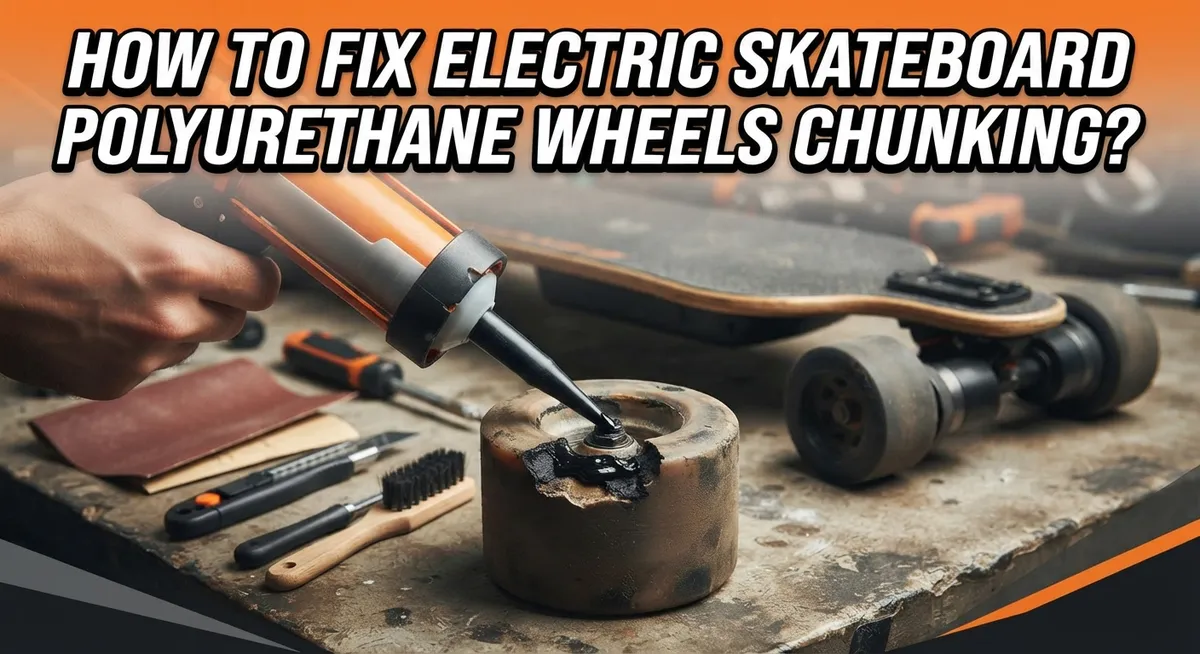
For small cracks, apply superglue directly into the opening. Use just enough to fill the space without overflow. Press the area gently and hold it steady for 30 to 60 seconds. Let the glue cure for the time recommended on the bottle before riding again.
Larger chunks need a different approach. Mix your epoxy resin according to package directions. Apply it into and around the damaged section. You can use a small stick or toothpick to work the epoxy into crevices. Smooth the surface as much as possible. Epoxy takes longer to cure, so wait the full recommended time.
Minor chips that don’t affect performance can get a cosmetic fix with touch up paint or nail polish. This prevents the exposed material from absorbing moisture and degrading further. Apply thin layers and let each one dry.
After repair, inspect the wheel for balance. Spin it slowly to check for wobbling. If the repair feels bumpy or uneven, you may need to sand it down gently with fine grit sandpaper.
Remember that repairs work best on minor damage. Severe chunking that affects how your wheel rolls means replacement is the smarter choice.
Step-by-Step Repair for Larger Chunks Using Epoxy
Larger chunks require a stronger repair method than superglue alone. Epoxy creates a durable bond that can hold broken pieces together and fill significant gaps in your wheel.
Start by gathering your materials. You’ll need two part epoxy, a small mixing container, a stirring stick, and sandpaper in medium grit. Have a clean cloth ready as well.
Clean the damaged area first. Use your cloth to remove all dirt, dust, and debris from the chunk and surrounding wheel surface. A dry wheel helps the epoxy bond properly.
Sand the damaged spot lightly. Focus on the area where the chunk broke off. This roughens the surface and helps epoxy grip better. Don’t sand aggressively or you’ll damage more of the wheel.
Mix your epoxy according to package directions. Most epoxy requires equal parts of resin and hardener. Stir thoroughly for about one minute until the color looks uniform throughout.
Apply the epoxy directly into and around the damaged area. Use your stick to press it into any cracks or gaps. Work quickly since epoxy sets fast. Fill the space completely so there are no air pockets.
If you have the broken chunk, you can try to reattach it. Press it into the epoxy and hold it steady. Wipe away excess epoxy with your cloth before it hardens.
Let the epoxy cure fully. Most varieties need 24 hours before you ride again. Check your product instructions for exact timing.
Once cured, sand the repair smooth. This ensures the wheel rolls evenly without catching or wobbling. Spin the wheel slowly to test for balance. If the repair feels solid and the wheel spins true, you’re ready to ride.
Setting Proper Wheel Tension to Prevent Future Chunking
Wheel tension directly affects how your polyurethane wheels perform and how quickly they develop chunks. When your axle nut is too tight, it creates binding. This binding forces excessive pressure on the wheel, which accelerates material breakdown and chunking.
Conversely, loose wheel tension causes wobbling. A wobbling wheel doesn’t roll smoothly, which creates uneven pressure points on the polyurethane surface. These pressure points become prime locations for chunks to form.
The goal is finding the sweet spot. Your axle nut should be snug enough that the wheel spins freely without any lateral play. Lateral play means the wheel moves side to side when you grab it by the tire.
Start by spinning your wheel by hand. It should rotate smoothly for several seconds without resistance. Now grab the wheel at the tire and try to move it left and right. You shouldn’t feel any movement. If you do, tighten the axle nut slightly.
Adjust the nut in small fractions, not full turns. Tighten it a quarter turn, then test again. Repeat this process until the wobble disappears but the wheel still spins freely.
Check your wheel tension regularly, especially after riding on rough terrain. Vibrations from impacts can loosen axle nuts over time. A quick weekly check prevents problems from developing.
Proper tension also improves your overall riding experience. Your skateboard will feel more responsive and stable. You’ll notice better control during turns and smoother acceleration.
By maintaining correct wheel tension, you reduce stress on your polyurethane material. This simple preventive step significantly extends wheel life and reduces chunking incidents before they start.
Common Mistakes That Accelerate Wheel Damage
Riding on the wrong terrain accelerates wheel damage faster than you might expect. Soft polyurethane wheels are especially vulnerable on gravel roads and rough concrete. The abrasive surface grinds away at the material, creating chunks and cracks that spread quickly.
Over tightening your axle nut is one of the biggest mistakes riders make. When you crank down too hard, the wheel binds against the truck. This binding creates excessive friction and heat, which degrades the polyurethane faster. The material breaks down under pressure, and chunking becomes inevitable.
Under tightening causes a different problem. Loose wheels wobble as they roll, which puts uneven pressure on specific spots of the wheel. These pressure points wear faster than the rest of the wheel surface. The repeated impact eventually causes chunks to break away.
Ignoring warning signs leads to bigger damage later. Small cracks are easy to fix, but if you keep riding on damaged wheels, those cracks expand into large chunks. The wheel loses its shape and becomes unsafe to ride on.
Skipping regular maintenance checks is another common mistake. Most riders don’t inspect their wheels until problems appear. By then, the damage is often severe. Regular checks catch small issues before they become expensive repairs or replacements.
Riding through puddles and wet conditions without drying your wheels afterward causes material swelling. Water absorbs into the polyurethane and weakens its structure from the inside. This makes the material more prone to chunking when you ride.
Mixing different wheel hardnesses on your skateboard creates uneven wear patterns. Softer wheels on one side and harder wheels on the other cause the board to handle inconsistently. This uneven stress accelerates damage on the softer wheels.
Troubleshooting Persistent or Recurring Chunking Issues
When chunking keeps happening on your electric skateboard wheels, the root cause usually points to one of three problems: improper wheel tension, riding on unsuitable surfaces, or material fatigue from repeated stress.
Start by checking your axle nut tension first. Many riders don’t realize that both over tightening and under tightening cause chunking. Over tightened nuts bind the wheel and create stress points where chunks break off. Under tightened nuts allow wobbling, which distributes pressure unevenly across the wheel surface. Spin your wheel by hand and listen for grinding sounds. If you hear grinding, loosen the nut slightly. If the wheel wobbles side to side, tighten it a quarter turn at a time.
Next, examine your riding habits and terrain choices. Gravel, rough concrete, and rocky surfaces attack polyurethane material much faster than smooth pavement. If you regularly ride on abrasive terrain, chunking will return even after repairs. Softer wheels suffer more damage on rough surfaces than harder wheels do. Consider adjusting your routes to avoid gravel roads when possible.
Material fatigue also plays a role in recurring chunking. Each time you repair a chunk, the wheel loses some structural integrity. After multiple repairs on the same wheel, the material becomes weaker in that area. Eventually, repairs stop working effectively because the damage is too extensive.
Track your repair history carefully. If you’ve repaired the same wheel three or more times in one month, replacement makes more sense than continued repairs. New wheels cost less than the time and materials spent on repeated fixes. Document where chunks appear and how quickly they return. This pattern helps you understand whether your setup, riding style, or wheel choice needs adjustment.
When to Repair vs. When to Replace Your Wheels
Deciding whether to repair or replace your wheels depends on the severity of the chunking damage. Small chunks under one quarter inch can usually be fixed with adhesive or epoxy. These minor repairs work well when the wheel still has most of its original structure intact.
Larger chunks or multiple damaged areas suggest replacement is the better choice. If you’ve already repaired the same wheel three or more times within a month, the wheel has lost too much material to stay safe. Each repair weakens the wheel further, and repeated fixes won’t restore its original performance.
Check how much of the wheel’s surface is affected. If chunking covers more than 25 percent of the wheel’s circumference, replacement makes more sense than repair. A heavily damaged wheel won’t roll smoothly and creates safety risks during riding.
Consider the wheel’s age and total wear. Older wheels that are already soft or worn down should be replaced rather than repaired. Repairing an aging wheel wastes time and money because more chunks will likely appear soon.
Your riding habits matter too. If you frequently ride on rough terrain, replacing with harder durometer wheels prevents future chunking. Softer wheels chunk more easily on gravel and uneven surfaces, so switching to a slightly harder compound solves the root problem.
Test the wheel’s overall condition by spinning it by hand. Listen for grinding sounds or feel for wobbling. These signs indicate structural damage beyond simple repair. When in doubt, replace the wheel. A new wheel costs less than multiple repair attempts and keeps your skateboard performing reliably.
Final Thoughts
Fixing chunked polyurethane wheels does not have to feel overwhelming. Small cracks respond well to superglue. Larger chunks need epoxy for a lasting fix.
Prevention matters more than repair. Keeping your axle nuts snug but not overtightened protects your wheels from unnecessary stress. This simple habit saves you time and money.
Your riding surface plays a huge role in wheel health. Avoid gravel and rough terrain whenever possible. Slow down on bumpy roads to reduce impact damage.
Regular checks catch problems early. Look at your wheels before and after each ride. Spotting small chips lets you fix them before they grow into bigger chunks.
Softer wheels chunk more often than harder ones. If you ride rough terrain frequently, consider this when choosing replacement wheels. Matching wheel hardness to your riding style reduces future headaches.
Repair works well for minor damage. But some wheels reach a point where replacement makes more sense. Trust your judgment based on chunk size and frequency.
Every rider faces this issue eventually. Polyurethane wheels wear down naturally over time. The goal is slowing that process, not stopping it completely.
Keep a simple maintenance routine. Check tension monthly. Inspect wheels after rides on unfamiliar terrain. Clean off debris that might cause abrasion.
Small efforts add up over time. A few minutes of care each week extends your wheel’s life significantly. This means fewer repairs and less money spent on replacements.
Chunking is manageable with the right approach. Understanding why it happens helps you prevent it. Knowing how to repair it keeps your board rolling smoothly.
Stay proactive with your wheel care. Your electric skateboard will thank you with smoother rides and longer lasting wheels.
Frequently Asked Questions
Why do softer polyurethane wheels chunk more easily?
Softer polyurethane wheels have less rigid material structure. This makes them more vulnerable to impacts and abrasion. When you ride on gravel, rough concrete, or rocky surfaces, the softer material degrades faster. The wheel’s surface breaks apart more readily under stress. Harder durometer wheels resist chunking better, but they offer less grip and comfort. Softer wheels provide better traction but sacrifice durability. Your terrain choice directly affects how quickly chunking happens.
What’s the difference between over tightening and under tightening axle nuts?
Over tightening your axle nut causes the wheel to bind and not spin freely. This creates excess friction and heat, which damages the polyurethane. The wheel may develop flat spots or chunks from the binding pressure. Under tightening leaves the wheel too loose, creating lateral wobble or play. A wobbling wheel bounces against obstacles and chunks more easily. The sweet spot is snug tension without extreme force. Adjust your axle nut slowly, a fraction of a turn at a time, until the wheel spins smoothly with no wobble.
Can superglue or epoxy really fix chunked wheels?
Superglue works for tiny cracks and minor chips. Epoxy handles larger chunks better because it fills gaps more effectively. These repairs are temporary solutions, not permanent fixes. The repaired area won’t match the wheel’s original strength. Repair works best for cosmetic damage or small structural issues. If multiple chunks appear on the same wheel or chunks return within weeks, replacement is smarter than repeated repairs.
How often should I check my wheels for chunking?
Inspect your wheels before and after each ride. Spin them by hand and look for new damage. Check for wobble or unusual sounds during rides. Catching damage early makes prevention easier. Regular checks help you spot patterns in where chunking occurs. This information guides your terrain choices and maintenance decisions going forward.

Hi, I’m Jessamine Rowell, the founder and voice behind ResizeMake (https://resizemake.com/), a space where I share my love for technology with the world. I write detailed and honest reviews on the latest tech products, gadgets, electronic devices, and trending Amazon items to help readers make smarter buying decisions.