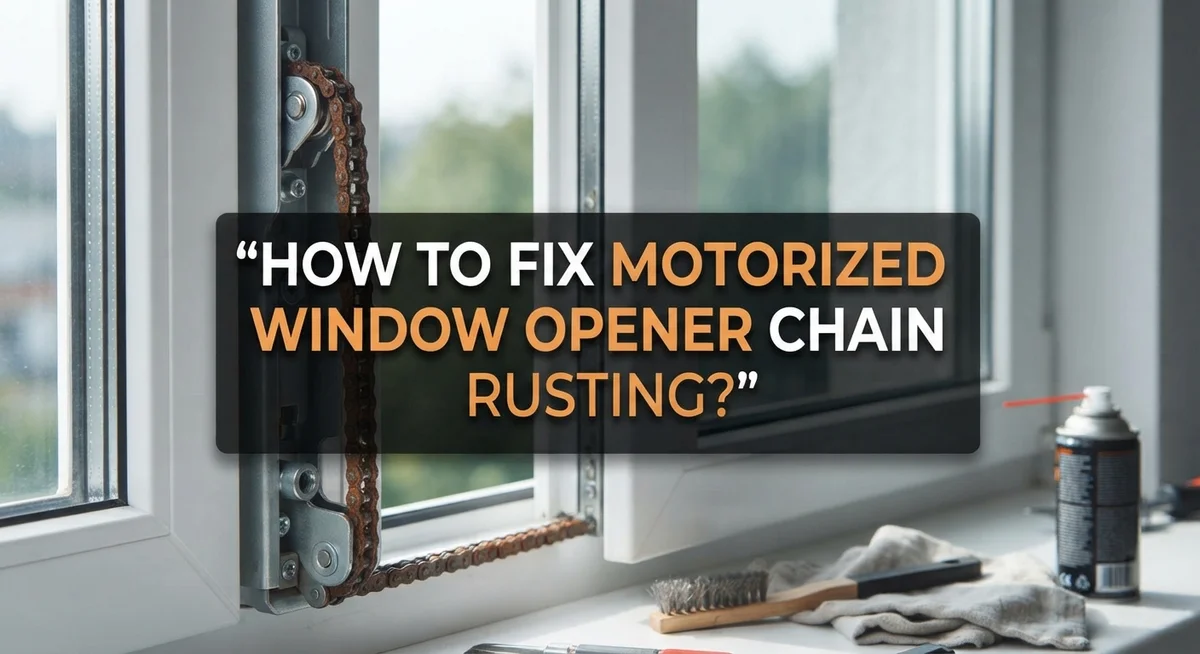
How To Fix Motorized Window Opener Chain Rusting?
Does your motorized window opener chain look rusty and feel stiff? You are not alone. Rust is a common problem for these devices, especially if they sit near moisture or humidity.
A rusty chain can cause big headaches. It might jam, misalign the gears, or stop your window from closing all the way. Sometimes the actuator limit switches even lose their calibration.
The good news? You can fix this problem yourself. This guide walks you through simple steps to remove rust and restore smooth function.
In a Nutshell
- Spray lubricant first. Use WD-40 on the rusty sections. Cycle the chain in and out to work it deep into the metal.
- Sandblast heavy rust. If lubricant alone does not work, sandblast the chain. This removes rust buildup completely.
- Paint right away. Always paint the chain immediately after cleaning. This step stops rust from coming back.
- Check the crank handle. A warped handle can make problems worse. Replace it if you spot damage or bending.
- Recalibrate limit switches. Rust can throw off your actuator settings. Inspect and adjust these switches so your window closes fully.
- Watch for jamming. Retractable chains often jam when rust builds up. Regular lubrication prevents this issue.
Why Motorized Window Opener Chains Rust
Rust forms on motorized window opener chains because metal reacts with moisture and oxygen in the air. Your window opener sits exposed to humidity, temperature changes, and outdoor elements. Over time, water seeps into the chain mechanism and triggers oxidation.
The metal housing that holds your chain can warp from repeated expansion and contraction. When the housing warps, gears inside shift out of alignment. This misalignment creates friction that wears away protective coatings on the chain. Bare metal then rusts faster.
Moisture is the main culprit. Rain, morning dew, and high humidity all accelerate rust formation. If your window opener lacks proper sealing, water pools inside the mechanism. The chain sits in this moisture and begins to corrode within weeks.
Chains also rust when you skip regular maintenance. A chain without protective coating absorbs water directly. Rust spreads quickly across unprotected metal surfaces. Once rust takes hold, it eats through the chain and causes stiffness.
Your actuator limit switches can also contribute to rust problems. When these switches miscalibrate, your window opener cycles incorrectly. The chain moves back and forth too many times, creating excess wear. Worn sections expose bare metal that rusts immediately.
Poor drainage around your window frame makes rust worse. If water cannot drain away from the opener, it pools and accelerates corrosion. Debris like leaves or dirt can block drainage holes and trap moisture against the chain.
Lack of lubrication speeds up rust too. A dry chain has no protective film to repel water. Moisture clings to bare metal and starts the rust process. Regular lubrication creates a barrier that keeps water away from the chain surface.
Understanding these causes helps you prevent future rust problems. Moisture control, regular maintenance, and proper lubrication are your best defenses against chain corrosion.
Signs Your Chain Needs Rust Repair
A rusty chain sends clear warning signs. Your window opener will make grinding or squeaking sounds when you open or close it. These noises mean rust is building up on the metal links and gears.
Look for visible rust spots on the chain itself. Orange, brown, or reddish discoloration shows oxidation has started. The rust may appear as light surface spots or thick crusty patches, depending on how long the problem has been present.
Your window will move slower than normal. A rusty chain creates friction, so the motor works harder to push or pull. You might notice the window hesitates mid-cycle or stops responding quickly to your commands.
The chain may feel stiff or sticky when you manually operate it. Try opening and closing the window by hand if your opener has a manual override. Resistance or binding means rust is restricting movement along the track.
Pay attention to jamming issues. A retractable chain that sticks or gets caught indicates rust has roughened the metal surface. The chain catches on sprockets or housing edges instead of moving smoothly.
Check if your window won’t close all the way. Rust causes gear misalignment, so the opener may stop short of the full closed position. This happens because corroded metal warps slightly, throwing off the mechanical timing.
Listen for clicking or grinding from the actuator motor. These sounds mean gears are not meshing properly due to rust buildup or chain misalignment.
Inspect the crank handle for visible damage or discoloration. A warped or discolored handle suggests moisture exposure and rust development inside the housing.
Feel for moisture around the window frame. Wet or damp areas near the opener indicate water is reaching the chain and causing oxidation. Condensation or water droplets on metal parts are red flags.
These signs appear gradually. Early detection makes repairs much easier and prevents complete chain failure.
Step-by-Step: Removing Rust and Restoring the Chain
Start by stopping the motorized opener so the chain stays still. Safety first. Locate all rust spots along the chain and the housing. Mark heavy rust areas with tape so you don’t miss them.
Apply lubricant spray to the rusted sections. Let it soak for about 5 to 10 minutes. This loosens surface rust and makes cleaning easier. Work the lubricant in by manually cycling the chain in and out several times. You’ll feel the stiffness decrease as the product penetrates.
For light rust, manual cycling may be enough. The chain should move smoothly after this step. Wipe away excess lubricant with a clean cloth.
Heavy rust requires sandblasting. Use a sandblaster to remove thick rust layers down to bare metal. Work carefully around the actuator motor and limit switches to avoid damage. Sandblasting removes rust quickly but leaves the metal exposed.
This is critical: paint immediately after sandblasting. Do not wait. Bare metal rusts fast, sometimes within hours in humid conditions. Apply a rust preventative paint designed for metal chains. Use thin, even coats. Let each coat dry fully before applying the next one.
Inspect your crank handle during this process. A warped handle indicates metal housing damage underneath. If the handle bends or doesn’t return to center, it needs replacement.
After cleaning and painting, recalibrate your actuator limit switches. Rust buildup can shift these settings, causing your window to stop at the wrong positions. Loosen the limit switch screws slightly and adjust them so your window opens and closes completely. Tighten everything securely.
Test the chain movement by cycling it several times. It should move smoothly without grinding sounds. Check that your window opens fully and closes completely. Listen for any clicking or unusual noises from the motor.
Recalibrating the Actuator Limit Switch After Repair
After you clean and paint your rusted chain, the actuator limit switch needs attention. This electronic component tells your window when to stop opening and closing. Rust damage often throws these settings out of alignment.
Start by locating your limit switch. Most motorized openers have this switch mounted near the motor or on the actuator arm itself. Check your opener’s manual to find the exact spot. The switch has adjustment screws or a calibration dial that control when the motor cuts off.
Before you adjust anything, manually cycle your chain several times. Move the window up and down slowly to feel where resistance occurs. This helps you identify where the switch should trigger. Pay close attention to how far the window travels.
Now adjust the limit switch settings. Most switches have two positions: one for the fully open stop and one for the fully closed stop. Turn the adjustment screw clockwise or counterclockwise in small increments. Make only quarter turn adjustments at a time. Test the chain after each small change.
Your window should close completely without forcing. It should also open to your desired position without overshooting. If the chain still jams or the window stops short, recalibrate again. This process takes patience but prevents future jamming issues.
Test the opener multiple times before considering the job complete. Cycle it at least five times in each direction. Listen for grinding sounds or clicking noises. These indicate the switch still needs adjustment.
If the window still won’t stop at the right position after several attempts, the switch itself may be damaged. Rust can corrode the internal contacts. In this case, the entire switch unit may need replacement. Document your adjustment settings so you can return to them if needed.
Preventing Future Rust and Chain Stiffness
Regular maintenance stops rust before it starts. The best defense is keeping your chain clean and dry. After each use, wipe down the chain with a dry cloth to remove moisture and debris. This simple step prevents water from sitting on the metal surface.
Apply lubricant to your chain on a consistent schedule. Do this every month during regular use, or every three months if you use the opener less often. The lubricant creates a protective barrier that blocks moisture from reaching the metal. Work the lubricant in by cycling the chain a few times so it coats all the links evenly.
Paint your chain after cleaning it. This is your second line of defense against rust. Paint seals the metal surface and prevents oxygen and moisture from causing oxidation. Use paint designed for metal surfaces. Apply two thin coats rather than one thick coat for better coverage and durability.
Check your window frame drainage regularly. Water that pools around the opener creates rust conditions. Clear any debris from drainage holes or channels. Make sure water can flow away from the mechanical parts easily.
Inspect your chain monthly for early rust signs. Catch rust spots when they are small and easy to treat. Small spots need only lubricant and light cleaning. Large rust patches require sandblasting and repainting.
Keep the crank handle dry too. Moisture on the handle transfers to the chain and gears. Store your window opener away from direct rain exposure if possible. If your opener sits in a humid area, consider using a dehumidifier nearby.
Test your opener regularly to catch problems early. Listen for grinding sounds or feel for stiffness. These signs mean rust is developing. Address them immediately before rust spreads to other parts. Consistent care keeps your motorized opener running smoothly for years.
Common Mistakes to Avoid During Repair
When fixing a motorized window opener chain, several mistakes can make your repair fail or cause new damage. Understanding what to avoid saves time and money.
Skipping the paint step is the biggest error. Many people remove rust with sandblasting or wire brushing, then stop. Bare metal rusts again within days or weeks. You must paint immediately after cleaning. The protective coating prevents moisture from reaching the metal underneath.
Don’t ignore the limit switch calibration. Your chain might look perfect, but if the actuator stops aren’t set correctly, the window won’t close fully. This puts stress on the motor and chain. Always recalibrate after rust removal.
Rushing the lubrication process causes problems too. Spraying lubricant once isn’t enough. You need to work it into the chain by cycling it in and out several times. This pushes the lubricant between the links and gears where rust hides.
Avoid using the wrong lubricant type. Some sprays attract dirt and dust, making rust worse. Others dry out quickly and offer no protection. Choose a lubricant designed for metal chains and moving parts.
Don’t overlook the crank handle. If it’s warped or damaged, it throws off gear alignment. Inspect it carefully during your repair. Replace it if you see bending or cracks.
Never force a jammed chain. Pushing hard can snap links or damage the motor. Stop immediately if you feel resistance. Apply more lubricant and wait a few minutes before trying again.
Finally, skip testing at your own risk. After repair, cycle your opener multiple times to confirm smooth operation. Listen for grinding sounds or clicking. These noises mean something isn’t aligned properly. Catching problems now prevents expensive damage later.
Troubleshooting Persistent Jamming and Closing Issues
When your motorized window opener chain jams repeatedly, the problem usually stems from rust buildup combined with misaligned gears. Persistent jamming means your chain cannot move smoothly through the mechanical system. This creates friction that stops the window mid cycle.
Start by examining where the chain actually gets stuck. Does it jam during opening, closing, or both? This tells you whether rust sits on specific chain sections or if the problem is widespread. Apply lubricant generously to the jammed area. Work the chain back and forth gently by cycling it in and out several times. This pushes the lubricant into rust deposits and helps break them loose.
If gentle cycling doesn’t free the chain, you may need to remove surface rust. Use a wire brush or sandblasting method to strip away corrosion. Never force a stuck chain, as this can damage the gears or snap the chain entirely. Take your time and let the lubricant do the work for you.
Metal housing warping causes another common jamming issue. Over time, the protective casing around your opener can bend slightly, throwing the gear alignment off. When gears don’t line up properly, the chain binds during movement. Inspect your crank handle and housing for visible bending or gaps. A warped crank handle may need replacement to restore smooth operation.
After you address rust and housing issues, your actuator limit switches need checking. These electronic stops control where your window closes. Miscalibrated switches can cause the window to stop prematurely, creating the sensation of jamming. Manually cycle your chain several times to observe its full range of motion. Compare this to where your window actually stops. If there’s a mismatch, your limit switches need adjustment to match the chain’s actual travel distance.
Final Thoughts
Rust on your motorized window opener chain does not have to ruin your window. Most problems come from simple neglect. A little lubricant and regular checks can fix or prevent most issues you face.
Fixing rust takes patience. You must clean the chain, remove rust completely, and paint it right away. Skipping any step invites the problem back.
Limit switch calibration matters just as much as rust removal. Even a clean chain will jam if your actuator stops are set wrong. Always check both parts together, not separately.
The good news is that most repairs need only basic tools. WD-40, sandpaper, and paint handle most rust problems. You do not need to call a professional for typical rust damage.
Prevention saves you time and money. A window opener that gets regular lubricant and paint rarely rusts badly. Monthly checks catch small problems before they grow.
Think of your chain like a bike chain. It needs oil to move smoothly. Without care, it will stiffen, rust, and eventually jam your window shut.
Remember that warped housing sometimes causes issues that look like rust problems. If cleaning and lubricating do not fix jamming, check the housing and crank handle too.
Testing after every repair step is not optional. Cycle your window several times before you call the job finished. This confirms your fix actually works.
If your chain keeps jamming after multiple repair attempts, the damage may be beyond a simple fix. At that point, replacement parts might serve you better than more repairs.
Overall, fixing rust on your motorized window opener chain is simple work. Clean it, lubricate it, paint it, and calibrate your switches. Follow these steps, and your window should open and close smoothly for years ahead.
Frequently Asked Questions
Why does my motorized window opener chain rust so quickly?
Chains rust when moisture reaches the metal surface. Your window opener sits outdoors and faces rain, humidity, and temperature changes. Metal housings can warp over time, which exposes the chain to more water exposure. Lack of regular lubrication speeds up rust formation because oil creates a protective barrier.
Once rust starts, it spreads fast. The chain becomes stiff and harder to move. This puts extra stress on your opener’s motor and gears.
Can I use any lubricant on my window opener chain?
No. Use a spray lubricant designed for metal chains and mechanical parts. The wrong type can attract dirt or gum up your chain instead of protecting it.
Apply lubricant regularly to keep rust from forming in the first place. Spray it on the chain sections that move the most. Then cycle your window in and out several times to work the lubricant in completely.
What should I do immediately after removing rust from my chain?
Paint the cleaned chain right away. This is critical. Bare metal rusts again within hours or days if you leave it exposed.
Use a paint made for metal surfaces. Let it dry fully before operating your window. Skipping this step means your rust problem returns quickly.
How do I know if my limit switches need adjustment?
Your window won’t close all the way, or it stops in odd positions. These electronic stops control where your opener halts. When they miscalibrate, the chain may jam because the motor keeps trying to move past the correct stopping point.
Check your opener’s manual for limit switch reset instructions. Most units have adjustment screws or electronic settings you can recalibrate yourself.

Hi, I’m Jessamine Rowell, the founder and voice behind ResizeMake (https://resizemake.com/), a space where I share my love for technology with the world. I write detailed and honest reviews on the latest tech products, gadgets, electronic devices, and trending Amazon items to help readers make smarter buying decisions.