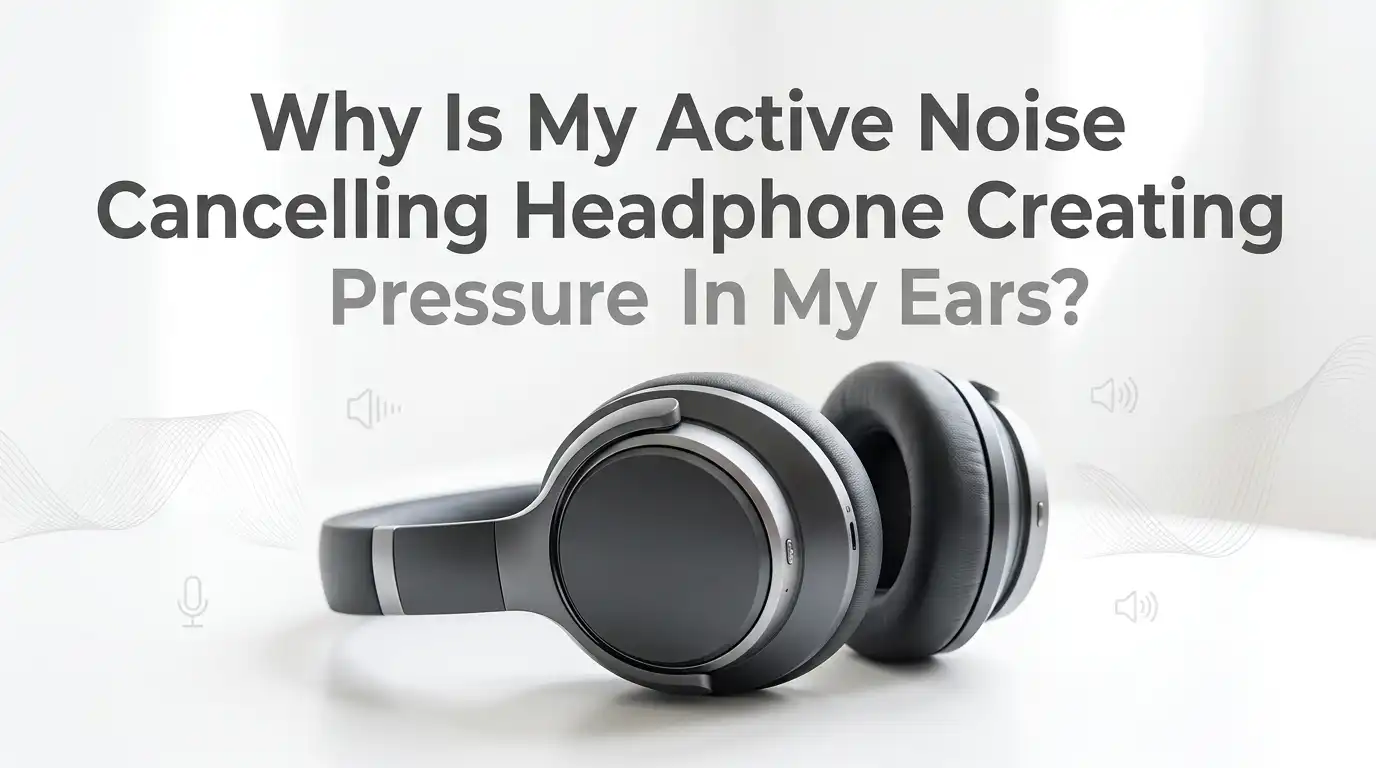
Why Is My Active Noise Cancelling Headphone Creating Pressure In My Ears?
If your active noise cancelling headphone makes your ears feel full, tight, or strangely pressurized, you are not imagining it. Many people feel this with ANC, especially during the first few uses. The good news is that this feeling usually does not mean the headphone is damaging your ears.
In many cases, your brain is reacting to the sudden drop in low background noise, or your ears are reacting to a fit issue, long wear time, high volume, or an ear problem that was already there.
This guide gives you simple, practical, step by step fixes. You will learn what causes the pressure feeling, what to test first, what settings to change, when to stop using ANC, and when it makes sense to speak with a doctor. If you want clear answers without fluff, keep reading.
In a Nutshell
- The pressure feeling is often a sensation, not real air pressure. Active noise cancelling removes a lot of low sound around you. Your brain notices that sudden change and may read it as ear pressure. That is why the feeling can seem very real even when no true pressure change is happening.
- Fit matters more than many people think. If your ear tips are too large, too small, or pushed in too deep, your ears can feel blocked fast. If you use over ear headphones, tight clamp force and a strong seal can also make your ears feel tired. A better fit often gives the fastest relief.
- Strong ANC is not always the best choice. Some people do better with lower ANC, adaptive modes, or even transparency mode in quiet places. More cancellation is not always more comfort. You want the setting that lowers noise without making your ears feel trapped.
- Long sessions and loud volume make the problem worse. Even if ANC is safe, high volume and long listening time can still irritate your ears. Short breaks, lower volume, and gentler listening habits help a lot. Comfort and hearing safety work together.
- Sometimes the headphone is not the full problem. Earwax, a cold, allergies, sinus pressure, or Eustachian tube trouble can make ANC feel much worse. If your ears already feel full without the headphone, the device may just be exposing a problem that needs attention.
- There are clear signs that tell you to stop and get help. Sharp pain, dizziness, ringing that stays, hearing changes, or pressure that lasts after you remove the headphone are warning signs. Do not push through those symptoms. Comfort should improve with use, not get worse.
What That Ear Pressure Feeling Usually Means
The first thing to know is this: active noise cancelling usually does not create real extra air pressure inside your ears. For many users, the feeling comes from how the brain reacts when low rumbling sounds suddenly disappear. That strange full feeling is often a sensory response, not a dangerous pressure event.
That said, the sensation can still feel strong. Your ears may seem blocked, like you need to pop them, or like you are on a plane. That is why people get worried so fast. The feeling is real to you, even if the cause is more about sound processing than air movement.
A helpful first step is to compare how you feel with ANC on, ANC off, and transparency mode on. If the feeling changes right away, ANC is likely the trigger.
Pros: Easy to test at home, fast, and costs nothing.
Cons: It does not tell you the exact cause by itself.
Why ANC Can Feel Strange Even Without Real Pressure
ANC works best on steady low sounds like engines, fans, and road noise. It uses microphones and an opposite sound wave to reduce what reaches your ear. That fast change can feel odd because your ears and brain are used to hearing a certain amount of low sound all day.
Some people adjust in a few minutes. Others never fully like the feeling. Both reactions are normal. Your body is basically saying, this sound world feels unusual. That does not always mean the headphone is bad. It may mean the ANC is too strong for your comfort level.
This is also why one pair may feel fine while another feels awful. Different brands, ear cup shapes, ear tips, and ANC tuning create different sensations.
Pros of understanding this cause: You worry less and troubleshoot better.
Cons: Knowing the cause alone does not remove the feeling. You still need to test settings and fit.
Switch Modes Before You Blame the Headphones
Before you assume the headphone is faulty, switch through every listening mode. Try noise cancelling, transparency, adaptive sound if your model has it, and fully off if that option exists. Use each mode for at least five minutes in the same room.
If the pressure feeling drops a lot in transparency or off mode, you have learned something important. The issue may be ANC strength, not the headphone itself. If the feeling stays the same in every mode, the problem may be fit, clamp force, earwax, or an ear issue.
This step is simple, but many people skip it. They wear the default setting and decide the whole product is wrong for them. Test first.
Pros: Fast, clear, and easy to repeat.
Cons: Some models do not let you fully turn ANC off, so testing can be limited.
Check the Fit and Seal First
Poor fit is one of the biggest reasons ANC feels bad. If you use earbuds, try a different ear tip size. A tip that is too small can leak sound and make ANC work harder. A tip that is too large can press on the ear canal and create a blocked feeling. Your goal is a gentle seal, not the deepest seal possible.
If you use over ear headphones, look at clamp force and cup position. The pads should sit evenly around the ear without squeezing too hard. Move the headband up or down and see if the pressure changes. Small shifts can make a big difference.
If your device offers a fit test or seal test, run it. A correct seal improves sound and often reduces discomfort.
Pros: Often the fastest fix, no cost, improves sound quality.
Cons: It may take a few tries to find the right tip size or wearing position.
Lower the ANC Strength or Use Adaptive Settings
Some headphones let you reduce the strength of noise cancelling. Others let you use adaptive sound that changes based on the room. If full ANC makes your ears feel heavy, try medium or low ANC first. You may lose a little noise blocking, but you may gain a lot of comfort.
This is a smart trade. A setting you can wear for two hours is better than a setting you remove after ten minutes. In many homes, offices, and cafes, medium ANC is enough anyway. Save the strongest setting for planes, trains, or other loud steady noise.
If your model has a sound optimization tool, run it while wearing the headphone the way you normally do. That can improve comfort and performance.
Pros: Better comfort, more control, useful for sensitive ears.
Cons: Less noise reduction in very loud places.
Give Your Brain Time to Adjust
Sometimes the best fix is a gentle adjustment period. If you are new to ANC, do not start with a three hour session. Start with ten to fifteen minutes. Then remove the headphone for a short break. Later, try twenty to thirty minutes. Build up over several days.
This works because your brain can learn that the strange silence is safe. For many users, the pressure feeling drops after a few short sessions. Slow exposure often works better than forcing yourself through discomfort.
Be honest with yourself during this step. Mild oddness is one thing. Sharp pain is another. If each session feels worse instead of better, stop using that mode or that model.
Pros: Free, simple, and effective for first time users.
Cons: It takes patience and does not help everyone.
Turn the Volume Down and Shorten Long Sessions
ANC can help you listen at lower volume, but many people still turn the sound up too high. That is a mistake. Loud listening can irritate your ears and make any pressure feeling seem stronger. Keep your volume at a moderate level and avoid long sessions without breaks.
A good habit is this: listen for under an hour, then take a few minutes off. If you are in a quiet room, lower the volume even more. Your ears do not need both strong ANC and loud audio at the same time.
This habit also protects your hearing. Safe listening matters because sound exposure builds over time. Comfort today and hearing health later are part of the same decision.
Pros: Protects hearing, reduces fatigue, easy to start today.
Cons: You may hear a bit more outside noise if you are used to loud playback.
Clean the Ear Tips Ear Cups and Microphones
Dirt changes how headphones feel and how ANC behaves. Earwax on ear tips, dust on microphones, and worn ear pads can make noise cancelling less accurate. That can lead to weak ANC, strange sound, or an uneven blocked feeling.
Clean the parts that touch your ears and the small microphone openings according to your brand instructions. Do not push anything deep into the holes. If your ear tips are old, replace them. If your over ear pads are flattened, consider new pads. A clean and healthy seal feels better and works better.
This is also a hygiene fix. Dirty earbuds can irritate the skin in your ear and make you think ANC is the problem when the real issue is contact discomfort.
Pros: Improves comfort, sound, and ANC accuracy.
Cons: Needs regular upkeep and careful handling.
Use Passive Isolation If Strong ANC Feels Bad
If strong ANC never feels right, switch strategy. Use headphones or earbuds with good passive isolation. That means they block sound because of their physical design, not because of heavy electronic cancelling. Foam tips, well fitted silicone tips, and well padded over ear cups can do a lot.
Passive isolation works especially well for speech, office noise, and many everyday sounds. It may not beat full ANC on airplane engine rumble, but it can feel much more natural. For some people, this is the long term answer.
You can also mix methods. Use lower ANC plus good passive isolation. That often gives a better comfort balance than max ANC alone.
Pros: More natural feel, less chance of pressure sensation, no battery need for isolation itself.
Cons: May block less low rumble than strong ANC in very noisy travel settings.
Watch for Earwax Colds and Eustachian Tube Trouble
If your ears already feel full before you wear the headphone, ANC may be exposing a problem that is already there. Earwax buildup can create fullness and muffled hearing. Colds, allergies, sinus issues, and Eustachian tube trouble can also make your ears feel blocked or hard to pop.
Ask yourself a few simple questions. Do your ears click when you swallow? Do they feel stuffed during a cold? Is one ear worse than the other? If yes, the headphone may not be the main cause. Your ears may need care first.
You can try simple steps like swallowing, yawning, chewing gum, or using saline for nasal stuffiness. But if fullness lasts, do not ignore it.
Pros of checking this early: You avoid blaming the wrong thing and get real relief faster.
Cons: Some causes need medical care, not just home fixes.
Reset Update and Know When to Get Help
If fit, mode changes, and short sessions do not help, move to device fixes. Update the firmware, check the app settings, reset the headphones, and re pair them. Some brands also offer sound calibration or noise cancelling optimization. These steps can fix odd behavior, feedback, or harsh ANC performance.
Still, there is a point where you should stop testing. If you get sharp pain, dizziness, ringing, hearing drop, nausea, or pressure that stays after the headphone is off, do not keep pushing through it. Comfort issues should improve with changes, not intensify.
If symptoms last more than a few days, or if ear fullness stays even without the headphone, book a hearing or ENT check. That is the safest next step.
Pros of resetting and updating: Can solve software or calibration issues.
Cons: It will not fix a medical ear problem or a model that simply does not suit you.
Build a Comfort Plan That Actually Works for You
The best solution is often a small routine, not one magic fix. Start with mode testing. Then adjust fit. Lower the ANC strength. Reduce volume. Take breaks. Clean the headphone. Check for wax, allergies, or cold symptoms. This step by step method is what helps most people find the real cause.
A comfort plan also keeps you from making quick choices based on one bad session. Maybe strong ANC feels bad at home but feels fine on a plane. Maybe earbuds bother you, but over ear models feel easy. Maybe passive isolation works better than ANC for your ears. Your answer can be personal.
The goal is simple. You want calmer listening without pain, pressure, or stress. If the headphone cannot give you that, change the setup or change the device.
FAQs
Can active noise cancelling damage my ears?
Active noise cancelling itself is generally meant to reduce outside sound, and that can help you listen at lower volume. So in many cases, it can support safer listening. But if your ears feel pain, dizziness, or lasting discomfort, stop using it. The setting should feel manageable, not painful. Loud volume is still a hearing risk, even if ANC is on. So keep volume moderate and take breaks.
Why do my ears feel like they need to pop with ANC on?
That feeling often happens because your brain notices a sudden drop in low outside noise and reads it as pressure. It can feel like airplane ear even when there is no true air pressure change. Fit can also add to that blocked sensation. If the feeling improves in transparency mode or with weaker ANC, that is a strong clue that the sound processing effect is the main cause.
Are earbuds or over ear headphones better for this problem?
There is no single winner. Some people find earbuds worse because the seal sits right in the ear canal. Others find over ear models worse because of clamp force and strong low frequency cancelling. Comfort depends on your ears, fit, and the way the ANC is tuned. If one style bothers you, try the other. Also test passive isolation before assuming all ANC products will feel bad.
What should I do if only one ear feels pressure?
If one ear feels much worse than the other, check the fit first. One ear tip may be too large, too deep, or not sealed well. Then look for earwax, nasal congestion, allergies, or a cold. If the difference stays even when the headphone is off, or if you notice hearing change or pain on one side, get medical advice. Uneven symptoms deserve more attention.
How long should I wait before seeing a doctor?
If the feeling goes away soon after you remove the headphone, you can try fit changes, lower ANC, shorter sessions, and cleaning first. But if fullness, ringing, pain, dizziness, or muffled hearing lasts beyond a short period, do not wait too long. A good rule is this: if symptoms stay for days, keep coming back, or happen even without the headphone, get checked by a professional.

Hi, I’m Jessamine Rowell, the founder and voice behind ResizeMake (https://resizemake.com/), a space where I share my love for technology with the world. I write detailed and honest reviews on the latest tech products, gadgets, electronic devices, and trending Amazon items to help readers make smarter buying decisions.