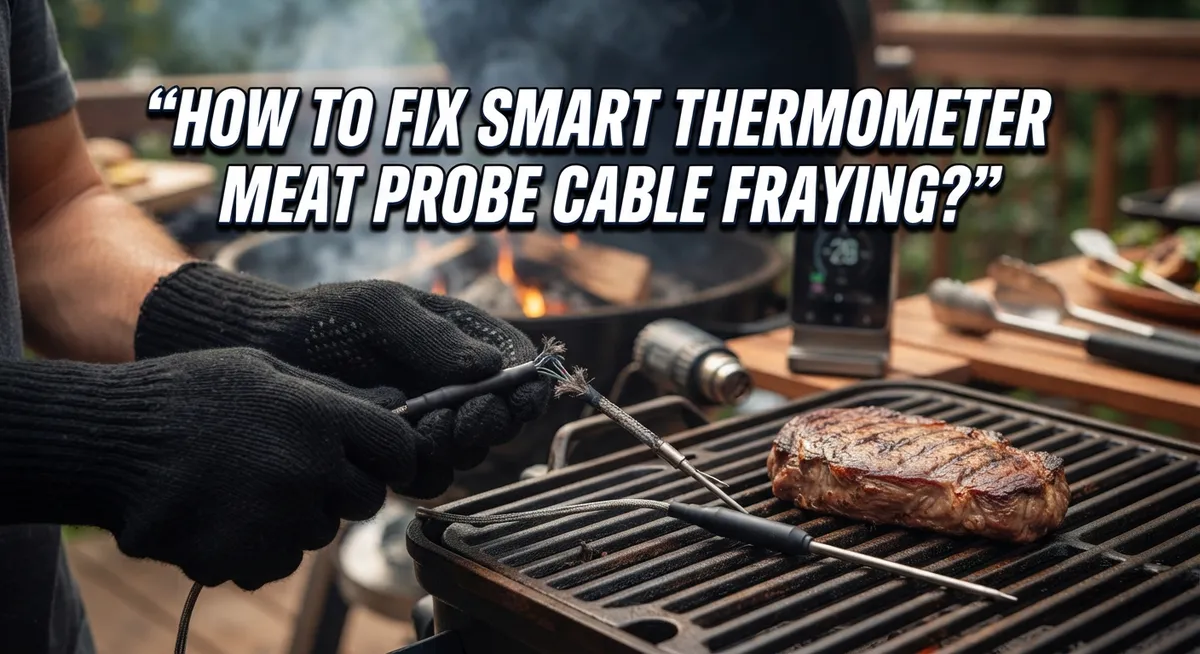
How To Fix Smart Thermometer Meat Probe Cable Fraying?
Your smart thermometer makes grilling so much easier. But one day, you notice the meat probe cable looks worn or frayed. This is a common problem, and it can be frustrating.
Frayed cables often happen because of pinching. Heavy smoker doors can compress the wire without you even noticing. Water damage is another sneaky cause of this issue.
The good news? You can fix this problem and prevent it from happening again. This guide will show you exactly how to do that.
In a Nutshell
- Fraying often starts small. Check your probe cable regularly for tiny cracks or exposed wires near the connector.
- Pinching is the top cause. Heavy smoker or grill doors can crush the cable if you close them without care.
- Water can sneak in too. Moisture damages the wire over time, so keep connections dry and sealed.
- Placement matters a lot. Push the probe at least 2 inches into the meat and avoid bone or fat for accurate readings.
- Clean connections work best. Use compressed air or a Q-tip with rubbing alcohol to keep the port free of grease and debris.
- Full connection prevents strain. Always make sure the probe sits flush in its port instead of loose or angled.
- Warranty can help. Many brands, including Recteq, cover frayed ambient probes under their manufacturer warranty.
Why Meat Probe Cables Fray: Common Causes
Meat probe cables fray for several clear reasons. Understanding these causes helps you prevent damage before it starts.
Pinching damage is the most common culprit. Heavy grill or smoker doors can crush your cable if you’re not careful. When you close the door, the rubber seal grips the cable tightly. Over time, this pressure damages the outer insulation and exposes the wires inside.
Physical stress on the cable creates weak spots. Bending the cable sharply or wrapping it too tightly around the thermometer unit causes internal wire damage. The fraying often appears weeks or months after the initial stress occurs.
Water and moisture attack cables from the inside out. Grease, rain, and steam can seep into the connector where the cable meets your thermometer. This moisture corrodes the metal connections and weakens the protective coating. Salt water is especially harmful if you use your grill near coastal areas.
Poor probe placement puts extra strain on the cable. When you insert the probe at an angle instead of straight into the meat, the cable bends awkwardly at the port connection. This repeated bending breaks down the wire insulation gradually.
Improper port connections also cause problems. If the probe doesn’t sit fully flush in the port, the connection loosens slightly. This creates micro movements that fray the cable over time.
Temperature extremes speed up cable damage. Constant heating and cooling cycles make plastic and rubber brittle. The outer jacket becomes less flexible and cracks more easily.
Age and regular use naturally wear cables down. Even with perfect care, cables eventually show signs of wear. Frequent temperature changes and repeated insertions into hot meat weaken the materials.
Recognizing these causes helps you develop better habits. You’ll know exactly what to avoid to keep your probe cable in good working condition for years.
Signs Your Probe Cable Is Damaged
Your probe cable shows damage in several clear ways. Learning to spot these signs early helps you fix problems before they get worse.
Look for visible fraying near the connector. This is where the cable enters your thermometer unit. You might see exposed wires or strands sticking out from the rubber coating. Even small frays can let moisture inside and cause electrical problems.
Check the cable along its entire length. Run your fingers gently over it while looking for cracks, splits, or thin spots in the outer layer. Damaged areas often feel softer or mushier than healthy cable sections.
Water damage shows up as discoloration or staining. The cable might look darker, have white crusty buildup, or show greenish tints. These signs mean moisture got inside and is corroding the wires. Corrosion reduces how well your probe works.
Your probe might stop reading temperatures accurately. If numbers jump around wildly or freeze in place, cable damage could be the reason. Bad connections from fraying prevent proper signal flow between the probe and your thermometer display.
Listen for crackling or static sounds. Some thermometers make noise when the cable connection is loose or damaged. This happens because frayed wires create bad electrical contact.
The connector itself might feel loose or wobbly. A healthy connection sits flush and snug against the port. If it wiggles or doesn’t seat fully, fraying inside the connector could be the cause.
Test your probe in hot water to see if it responds. A damaged cable might show delayed readings or no response at all. Compare it to how your probe normally behaves.
Check your warranty coverage too. Many manufacturers cover probe cable fraying under their warranty terms, especially if damage happened during normal use. Document what you see with photos before contacting support.
Step-by-Step: How To Fix a Frayed Probe Cable
Start by gathering what you need. Find a small container with rubbing alcohol, a clean cloth, and a Q-tip or soft brush. You’ll also want a magnifying glass to see the damage clearly.
Inspect the frayed area first. Look at where the cable enters the connector. Use your magnifying glass to see exactly how much fraying occurred. Check if the outer insulation is torn or if inner wires are exposed. Take note of the damage location.
Stop the fraying from spreading. If you see loose strands, carefully trim them with small scissors. Cut only the loose fibers, not the main cable. Be gentle so you don’t damage healthy wires underneath.
Clean the connector thoroughly. Disconnect the probe from your thermometer. Dip your Q-tip in rubbing alcohol and clean around the connector port. Remove any grease, salt residue, or moisture that collected there. Let it dry completely for at least 5 minutes.
Seal the frayed section. Once dry, you can apply a thin layer of heat shrink tubing or electrical tape around the damaged area. Wrap tape tightly but not too tight. Leave the connector end free so it still fits properly into your thermometer. Make sure no tape blocks the connection pins.
Test the connection. Reattach the probe to your thermometer. Check that it sits fully flush with the port. The connection should feel snug, not loose or wobbly. Power on your device and verify the probe reads temperature correctly.
Prevent future damage. Going forward, avoid pinching the cable in your smoker or grill door. Keep the connector dry and protected from moisture. Store your probe carefully when not in use.
If the probe still doesn’t work after these steps, the internal wires may be too damaged to repair.
Proper Probe Placement To Prevent Future Damage
Proper probe placement stops cable damage before it starts. Your probe cable suffers most when you insert it incorrectly into the meat.
Push your probe at least 2 inches into the meat. This depth goes past the safety line marked on most probes. Shallow insertions force you to bend the cable at sharp angles. Sharp angles create stress points where fraying begins. The cable should enter the meat straight, not at an awkward angle.
Avoid placing your probe near bones or large fat deposits. Bones create hard resistance that makes you push harder on the cable. Fat deposits give false temperature readings, so you’ll reposition the probe repeatedly. Each repositioning flexes the cable more. Repeated flexing breaks down the inner wires.
Keep the cable fully flush with the port connection on your thermometer. A loose connection allows the cable to wiggle and move. Wiggling motion causes internal wire breakage over time. Push the connector in until you feel it seat completely. Don’t force it, but make sure it sits snug.
Route your cable away from your smoker or grill door. Heavy doors can pinch cables if they hang loose. A pinched cable gets crushed, and crushed cables fray quickly. Guide the cable along the side of your equipment instead. Keep it away from the hottest areas of your smoker.
Never let the cable rest against hot surfaces. Temperature extremes make plastic and rubber brittle. Brittle materials crack and split easily. A cable that touches a hot grate will degrade faster than one kept cool.
Check your probe placement before each cook. Correct placement takes only seconds but prevents hours of frustration. Proper insertion depth, correct positioning away from bones, and secure connections work together to keep your cable intact. These simple habits extend your probe’s lifespan significantly.
Cleaning and Maintaining Your Probe Port
Your probe port needs regular attention to stay in good working order. The port is where your cable connects to your thermometer unit, and this spot collects dirt, moisture, and debris over time.
Start by unplugging your thermometer before you clean anything. Safety comes first when working with electronics. Remove your probe cable completely from the port connection.
Use compressed air to blow out loose particles from inside the port. Hold the can upright and use short bursts. This removes dust and food particles that can interfere with your connection. If you don’t have compressed air, a clean dry cloth works too.
For stubborn buildup, grab a cotton swab and dampen it with rubbing alcohol. Gently insert the swab into the port and twist slowly. Alcohol evaporates quickly, so it won’t leave moisture behind. Let the port dry completely before reconnecting anything.
Check the cable connector itself while you’re at it. Look for corrosion, discoloration, or bent pins. Wipe the connector end with a dry cloth to remove any residue.
When you reconnect your probe, push it straight in until you feel it click or seat fully. A loose connection causes signal problems and lets moisture creep in around the edges. The cable should feel snug and secure.
Do this cleaning every few weeks during heavy use season. If you cook frequently, monthly maintenance prevents most port problems. After each cook, simply wipe the exterior of the port with a dry cloth.
Water is your cable’s biggest enemy. Keep your thermometer away from direct spray when cleaning your grill or smoker. Store your thermometer indoors where humidity stays low. These simple steps keep your probe port clean and your readings accurate all season long.
Common Mistakes That Accelerate Cable Wear
Many people damage their thermometer cables without realizing it. Understanding these mistakes helps you keep your probe working longer.
Pinching the cable in your door is the biggest culprit. Heavy smoker and grill doors compress cables when they close. The weight puts stress on the wire insulation. Over time, this pressure causes the outer coating to crack and fray. Always route your cable away from the door seal before closing.
Incorrect probe placement in the meat also causes problems. When you insert the probe too shallow, the cable stays exposed to heat and smoke. Push your probe at least 2 inches into the meat. This keeps the cable further away from extreme temperatures. Never let the cable touch hot grates or surfaces directly.
Loose connections accelerate wear faster than you think. When your probe doesn’t seat fully in the port, it wiggles during cooking. This movement stresses the cable where it enters the connector. Push your probe straight in until you hear a click or feel it lock into place.
Leaving your probe connected during storage creates unnecessary strain. The cable can bend at sharp angles when you put your thermometer away. Disconnect the probe and store it separately in a cool, dry spot.
Water damage sneaks up on many people. Moisture gets inside the connector and causes corrosion on the wires. This weakens the cable structure and leads to fraying. Never spray water directly near your thermometer connections. Keep your device away from cleaning spray and steam.
Placing your probe near bones or large fat deposits causes false readings. You might wiggle the probe around to find the right spot. This movement flexes the cable repeatedly. Find the right position first, then leave it alone during cooking.
These simple mistakes add up quickly. Avoiding them keeps your cable intact and your thermometer working properly for years.
Troubleshooting Persistent Fraying and Warranty Options
When your smart thermometer cable keeps fraying despite your best efforts, you’ve reached the point where troubleshooting becomes warranty work. Persistent fraying means the cable’s protective sheath has broken down beyond simple prevention tactics.
Start by documenting the damage with clear photos. Take pictures of the frayed section, the connector area, and any visible wire exposure. This documentation helps when you contact the manufacturer about warranty coverage. Note when the fraying started and what conditions led to it.
Check your thermometer’s warranty period first. Most manufacturers cover cable and probe defects for one to three years from purchase. Fraying that occurs during normal use typically falls under manufacturer defect coverage. Water damage and intentional misuse usually do not qualify, so be honest about how the damage happened.
Contact the manufacturer’s customer support with your photos and purchase information. Explain exactly when and how the fraying started. Many companies offer replacement cables or full probe replacements at no cost during the warranty period. Some even send replacements before you return the damaged unit.
If your warranty has expired, you face a decision. A frayed cable poses safety risks and prevents accurate temperature readings. You can attempt temporary fixes with heat shrink tubing or electrical tape, but these are band aid solutions. The cable will continue deteriorating.
Consider the age of your thermometer. If it’s several years old, replacement might make more financial sense than expensive repairs. Newer models often have improved cable designs that resist fraying better.
Keep all receipts and warranty documentation in one place. Many manufacturers extend warranty periods if you register your product online. Taking five minutes to register could give you extra coverage when problems arise. This simple step prevents frustration later.
Final Thoughts
Cable fraying doesn’t have to ruin your grilling experience. Most damage happens because of simple habits you can change today.
Keep cables away from door seals. Insert probes deep enough into the meat. Clean your ports on a regular schedule.
These small steps prevent most fraying problems before they start. Your thermometer will last longer, and you’ll get more accurate readings every time.
When fraying does happen despite your best care, act fast. Document the damage right away with photos.
Check your warranty status before doing anything else. Many brands replace frayed probes at no cost, especially for known issues with certain grill models.
Don’t wait until your probe stops working completely. A small fray today becomes a bigger problem tomorrow if water gets inside the wire.
Good habits make a real difference. Store your thermometer properly between uses. Disconnect probes before packing away your grill.
Avoid letting cables dangle near heat sources or sharp edges. These simple changes add years to your thermometer’s life.
Remember that manufacturers often know about common failure points. If you notice a pattern with your specific model, reach out to customer support.
They may already have a fix or replacement program ready for you.
Taking care of your smart thermometer is easier than it sounds. A few minutes of attention each week saves you money and frustration later.
Your grilling results depend on accurate temperature readings. A frayed cable can give you false data at the worst possible time.
Stay ahead of the problem with routine checks. Look at your cables before every cook session.
Feel for any soft spots or exposed wires. Catching issues early means fewer surprises during your next barbecue.
With proper care, your meat probe will serve you well through many seasons of cooking. Simple maintenance keeps your smart thermometer working the way it should.
Frequently Asked Questions
Why does my smart thermometer probe cable fray so easily?
Cable fraying happens for a few main reasons. Heavy smoker doors pinch cables when they close, crushing the protective sheath. Water gets inside the cable and causes internal damage. Wiggling the probe around inside the meat also stresses the wires. Most fraying comes from these preventable habits rather than manufacturing defects.
Can I use my thermometer if the cable has small frays?
Small frays are a warning sign. Stop using the probe right away. Even tiny exposed wires can short out or let water inside. Your thermometer might still work now, but damage spreads fast. A small fray today becomes a complete failure tomorrow if moisture gets in.
How do I prevent my probe cable from fraying in the first place?
Keep your cable away from door seals and heavy equipment. Insert your probe at least 2 inches into the meat so the cable stays clear of the smoker. Make sure the probe sits fully flush in the port connection. Never let the cable dangle near heat or sharp edges. These simple steps stop most fraying before it starts.
What should I do if my cable is already frayed?
Take clear photos of the damage right away. Check your warranty paperwork and purchase receipt. Contact the manufacturer’s customer support with your documentation. Most warranties cover cable damage from normal use. If your warranty expired, you’ll need to decide whether repair or replacement makes sense based on the thermometer’s age.

Hi, I’m Jessamine Rowell, the founder and voice behind ResizeMake (https://resizemake.com/), a space where I share my love for technology with the world. I write detailed and honest reviews on the latest tech products, gadgets, electronic devices, and trending Amazon items to help readers make smarter buying decisions.